

The simplest festival outfit formula is shoes first, packable layers second, one statement piece last. Everything else is decoration. Build from broken-in footwear that can survive a field or a crowd, add a layer for the temperature drop after dark, then let one bold item (a vest, boots, a print) carry the personality. What follows is a full lookbook, a packing checklist, festival-specific swaps, fabric advice, and a note from VALID's founder on why rewearable staples beat costume pieces every time.
TL;DR:
- Prioritize durable footwear like broken-in sneakers or trail shoes over sandals or new shoes to prevent blisters and outfit damage.
- Pack a lightweight rain shell and a warm layer, such as a flannel or denim jacket, to handle sudden weather changes without sacrificing space.
- Focus on rewearable basics like caps, socks, and versatile tops that survive many washes and seasonal transitions.
- Match festival types with appropriate gear, such as rugged denim for country events and breathable athletic wear for raves.
- Invest in long-lasting fabrics and practical accessories to build a personal, sustainable festival wardrobe that extends beyond one weekend.
Table of Contents
- Festival Outfit Ideas: Eight Looks Anyone Can Recreate
- Festival Bag Essentials and a Packing Checklist That Actually Works
- Matching Your Outfit to the Festival Type
- Fabrics and Footwear That Actually Hold Up
- What VALID Believes About Festival Style
- Hair and Makeup That Survive a Twelve-Hour Day
- Sustainable Festival Fashion Choices Worth Making
- Keeping Your Personal Style Without Sacrificing Comfort
- Handling Sudden Weather Changes at a Festival
- The Real Lesson Behind 2026 Festival Fashion
- Build Your Festival Wardrobe Around Pieces That Last
- Sources
Festival Outfit Ideas: Eight Looks Anyone Can Recreate
Editorial trend coverage for 2026 keeps circling back to one idea: outfits should survive the festival and your closet afterward, not just one Instagram post. Marie Claire's festival dressing guide frames this as a shift toward intentional, reworkable pieces instead of throwaway costumes. Here are eight formulas built on that logic.
1. Denim Shorts, Flannel, Biker Boots. A grunge-adjacent staple. Tie the flannel around your waist when it's hot, wear it open when the sun drops. Swap boots for chunky sneakers if you're standing all day.
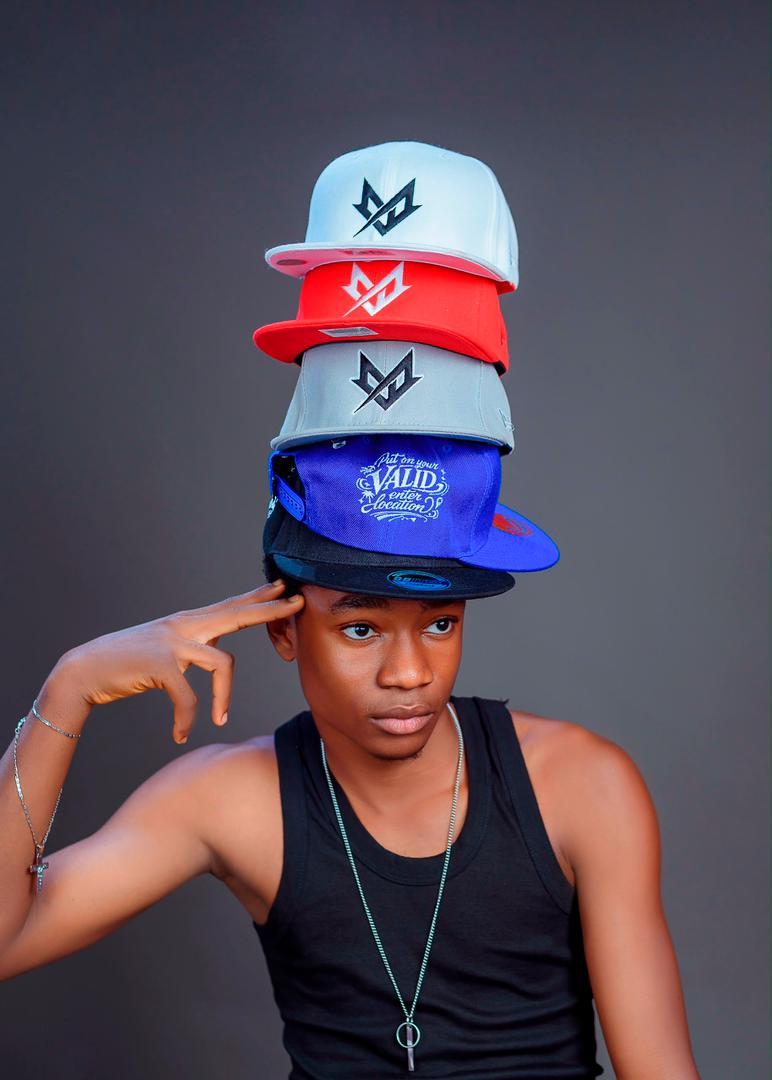
2. Board Shorts, Graphic Tee, Cap. Built for anyone who wants zero fuss and full mobility. Works for a rave, a beach festival, or a lazy Sunday main stage set. A well-made cap does double duty as sun protection.
3. Crochet Top, Wide-Leg Pants, Trail Sandals. Breathable and photogenic without sacrificing coverage. Trail sandals with a strap beat flip-flops for standing in a packed crowd for hours.
4. Maxi Dress, Denim Jacket, Combat Boots. For someone who wants one piece to do the styling work. The jacket packs down small; the boots handle mud without ruining the silhouette.
5. Draped Top, Cutoffs, Ankle Boots. A quick, low-effort formula that reads polished. Swap the boots for sport sandals on a hot afternoon set and switch back for the evening headliner.
6. Utility Vest, Bike Shorts, High-Top Sneakers. Built for movement and pockets you actually need. This one suits EDM stages and anyone who hates carrying a bag.
7. Oversized Tee, Bucket Hat, Cargo Pants. Comfortable enough for a twelve-hour day, still deliberate. Roll the cargo cuffs and swap in shorts if the forecast spikes.
8. Fringe Skirt, Tank, Broken-In Sneakers. Fringe adds movement without adding weight. WhoWhatWear's 2026 roundup pairs this kind of trend piece with sturdy, practical footwear rather than anything fragile, and that pairing is what keeps the look wearable past one festival weekend.
Each of these swaps a skirt for shorts or boots for sneakers while keeping the outfit's core identity intact. Flexibility is more important than any single trend piece.
Festival Bag Essentials and a Packing Checklist That Actually Works
A small crossbody or a clear bag that clears security fast beats anything bulky. Most venues now enforce clear-bag policies, and fumbling at the gate wastes time you'd rather spend at the stage. Outfit-forecast's packing breakdown lists the items people forget most: a compact power bank and sunscreen, plus blister plasters for the shoes you swore were broken in.
Pack this for a single day:
- Crossbody or clear bag that meets entry rules
- Compact power bank and a short charging cable
- Travel sunscreen, lip balm with SPF, electrolyte tablets
- Refillable water bottle or collapsible pouch
- Small first-aid kit: blister plasters, pain reliever, bandages
For multi-day camping, the packing gets more strategic. A five-piece capsule kit covers rewear without overpacking: two tees, one long-sleeve layer, denim shorts, joggers for the cold hours, one pair of broken-in shoes, and a packable rain shell. Quick-dry fabrics and two or three spare pairs of socks matter more than extra outfits.
Pro Tip: Pack one pair of socks per day, minimum. Wet or muddy socks ruin comfort faster than any wardrobe choice you make.
Matching Your Outfit to the Festival Type
Different festivals reward different priorities. A rave and a country festival ask for almost opposite wardrobes, and matching the crowd usually means matching the terrain too.
1. EDM and rave sets. Go with a breathable athletic base, tight or secured pockets so nothing falls out while dancing, and one reflective or light-up piece if you want to stand out after dark.
2. Country festivals. Durable denim or a sturdy skirt, paired with broken-in cowboy or leather boots and a wide-brim hat, handles both sun exposure and dusty ground.
3. Indie and main-stage lineups. A dressy one-piece plus sturdy footwear covers the daytime slots, and one packable layer covers the temperature drop once the headliner starts.
4. Multi-day camping festivals. Durable footwear and a packable rain shell matter more than any single outfit. Build a small capsule wardrobe you can remix across four or five days instead of packing a new look for each one.
The Guardian's practical festival guidance backs the same pattern across formats: prioritize footwear and rain readiness over anything decorative, because mud and heat don't care about your aesthetic.
Fabrics and Footwear That Actually Hold Up
Linen and cotton blends breathe well in daytime heat. Quick-dry synthetics handle high-sweat contexts like dance floors better than natural fibers. Crochet and knit pieces look great in photos, but plan a light layer underneath since they're rarely warm enough alone once the sun drops.
Footwear rules are less flexible. Closed-toe shoes outperform sandals almost everywhere except a hot, dry day stage where chunky sport sandals work fine. Broken-in sneakers, hiking or trail shoes for rough terrain, and cowboy boots for country lineups cover most situations. Skip flip-flops entirely. Skip brand-new shoes too. Both are the fastest way to end a festival with blistered feet and a ruined outfit.
- Darker colors hide dirt and dust better than pastels
- Choose pieces you can wipe down or rinse, not dry-clean-only fabrics
- Pack one lightweight waterproof shell no matter the forecast
Footwear consistently ranks as the single biggest comfort factor across festival wear recommendations, ahead of layering or accessories. If you only upgrade one thing before your next festival, upgrade your shoes.
What VALID Believes About Festival Style
VALID was founded by Ajakaye Okikiola Samuel on a simple idea: style should come from confidence, not approval. That philosophy shapes how we think about festival dressing. A cap, a pair of socks, a basic tee, these aren't filler pieces. They're the staples that anchor a bold outfit and survive the wash cycle afterward, which is the whole point of building a wardrobe instead of a costume box.
Rewearable streetwear works at a festival for the same reason it works everywhere else: it lets the wearer's personality lead, while the piece itself just does its job season after season.
Hair and Makeup That Survive a Twelve-Hour Day
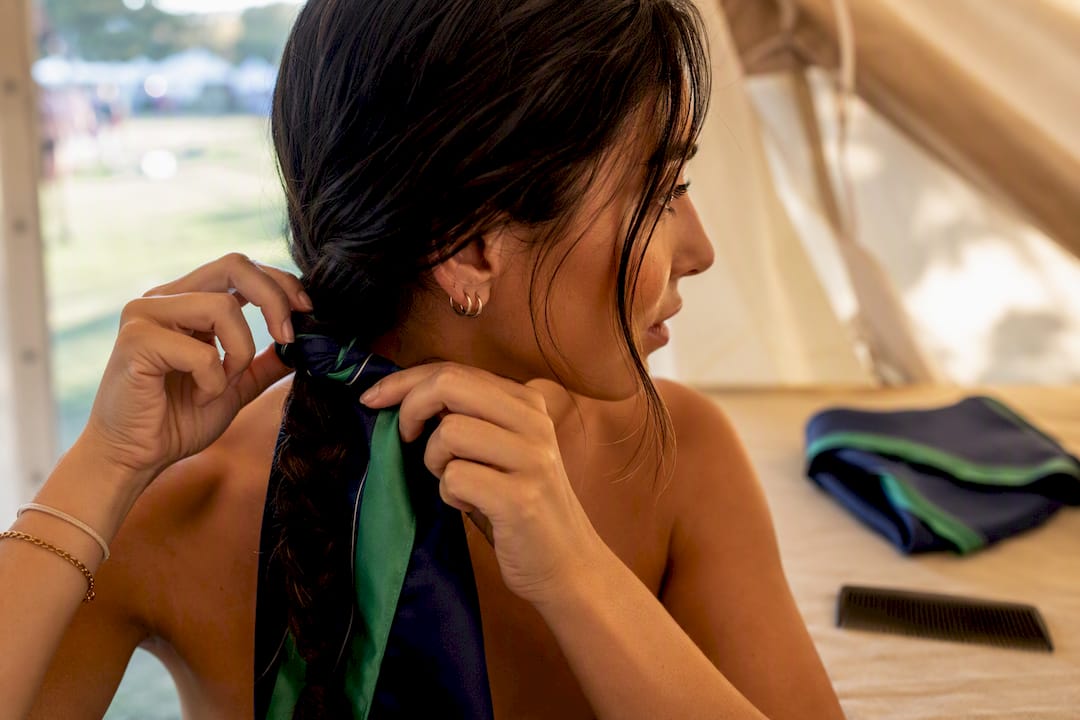
Festival hair and makeup need to survive heat, sweat, and crowd contact, not just look good in the mirror before you leave. Braids, whether box braids, Dutch braids, or a simple half-up braid, hold shape through hours of movement better than loose curls ever will. A bandana or scarf tied over the hairline does double duty: it controls frizz and reads as a styling choice, not a fix.
Makeup should lean toward long-wear formulas. Waterproof mascara and a tinted, sweat-resistant sunscreen do more work than a full face of foundation that slides by 3 p.m. Cream blush and a lip stain hold color longer than powder products in humid, crowded conditions. Glitter and face gems are fine in moderation, but stick to cream-based glitter gel over loose glitter, which migrates into eyes and sweat within an hour.
Skip anything that requires touch-ups you won't have time for. A festival day rarely includes a quiet moment for a full makeup redo, so the best look is the one that still works at hour ten. If you're camping multi-day, dry shampoo and a small pack of face wipes matter more than any extra product in your bag.
Sustainable Festival Fashion Choices Worth Making
Buying less, buying better, and rewearing pieces across multiple festivals is the most practical form of sustainability most attendees can manage. Thrifted denim, secondhand boots, and vintage band tees fit the festival aesthetic naturally, and they cost less than fast-fashion versions that fall apart after one wash in mud.
Renting or swapping statement pieces, like a fringe jacket or a sequined top, cuts down on one-off purchases for looks you'll only wear once. Several resale and rental platforms now cater specifically to festival-season demand, which makes this easier than it used to be.
Choosing durable basics over trend-driven costume pieces is the other half of the equation. A well-made cap or a pair of sturdy socks gets worn dozens of times across seasons, while a single-use glitter outfit usually ends up in a landfill after one weekend. That's the entire argument for building a festival wardrobe around staples rather than novelty. The 2026 shift toward rewearable, intentional festival dressing lines up directly with sustainable buying habits, not against them.
Keeping Your Personal Style Without Sacrificing Comfort
Personal style and comfort aren't opposites at a festival. The trick is picking one place to be bold and letting everything else support it. If your statement piece is a metallic skirt, keep the shoes practical. If your footwear is the standout item, like embroidered boots, keep the top simple.
Comfort constraints should come first, then style fills in around them. Decide what terrain and weather you're dealing with, lock in shoes and a base layer that can handle it, and only then choose the accessories or prints that express your personality. This order matters more than most people think. Choosing the "fun" piece first and working backward is how people end up in outfits that look great for twenty minutes and miserable for the other eleven hours.
Mixing high and low pieces also keeps a look personal without adding cost. A thrifted vest over a basic tee, paired with one well-made accessory, reads as intentional rather than expensive. Style comes through in the choices, not the price tag.
Handling Sudden Weather Changes at a Festival
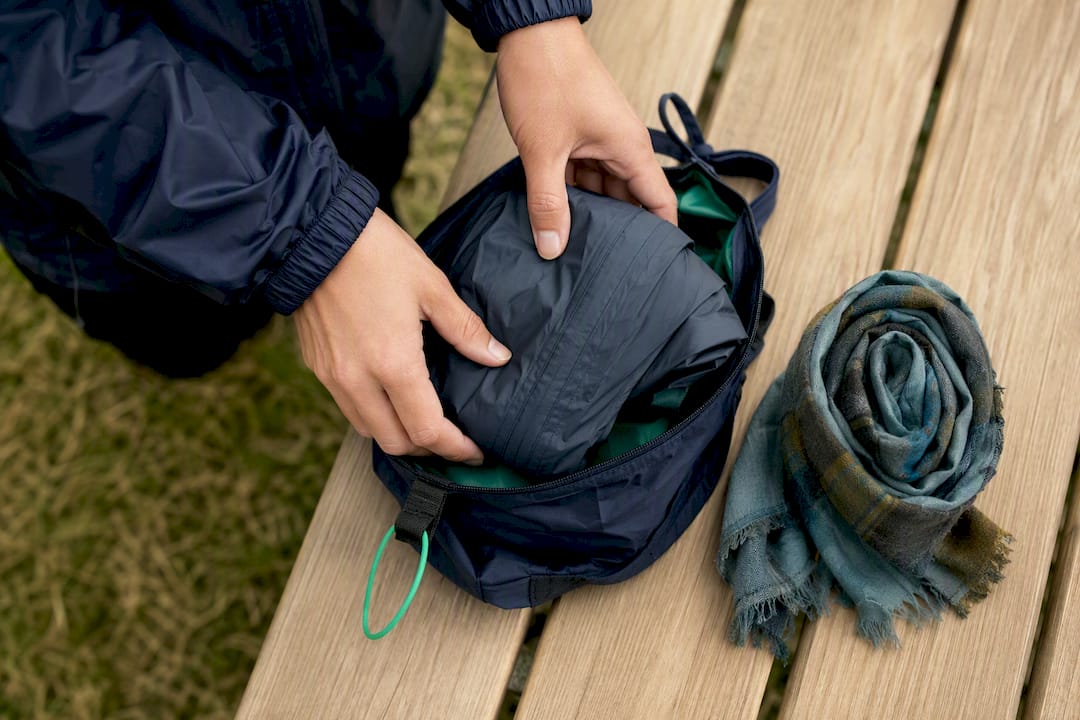
Weather at outdoor festivals shifts fast, and the practical fix is packing for both extremes rather than betting on the forecast. A lightweight, packable rain shell takes up almost no space in a bag and solves the single most common wardrobe failure at outdoor events: sudden rain with no layer to handle it. The Guardian's festival guidance is blunt about this, noting that nothing kills a festival outfit faster than an unplanned downpour with no rain layer in the bag.
Sun protection needs a backup plan too. Travel sunscreen and a wide-brim hat or cap cover most of the day, but a lightweight long-sleeve layer works as a backup when reapplying sunscreen isn't practical mid-crowd. Bandanas and scarves double as neck protection and dust coverage on windy, dry-ground festivals.
Temperature drops after sunset catch more people off guard than rain does. Pack one layer, a denim jacket, a flannel, or a packable puffer, no matter how hot the forecast says the day will be. It costs you almost nothing in bag space and solves a problem that ruins more festival nights than any other single mistake.
The Real Lesson Behind 2026 Festival Fashion
Most festival advice still treats outfits as one-day costumes: buy something loud, wear it once, forget it exists by August. The research behind 2026 festival dressing points somewhere else entirely. The trend toward versatile, rewearable pieces isn't just an aesthetic shift, it's a correction to years of overspending on single-use looks that fell apart after one weekend in the mud.
Conventional advice overweights the "statement piece" and underweights footwear, which is backwards. Shoes decide whether your day is enjoyable; the vest or the print just decides whether your photos are interesting. Get the shoes and layers right first, then spend your creative energy on the one piece that actually reflects who you are.
If there's one thing to prioritize before your next festival, it's building from pieces you'll wear again in October, not just in July.
— VALID
Build Your Festival Wardrobe Around Pieces That Last
A cap that survives sun, sweat, and a dozen washes. Socks that don't fall apart after one muddy field. Basic tops that layer under a vest one weekend and under a jacket the next. That's exactly the kind of staple this article keeps circling back to: durable pieces that anchor a festival look without becoming a one-weekend costume.
Every piece referenced is built around the idea that confidence doesn't come from a trend, it comes from wearing something that fits who you actually are. Browse the current lineup of caps, socks, and basics on the VALID homepage and start building a festival wardrobe you'll still be wearing long after the lineup announcement fades from your feed.